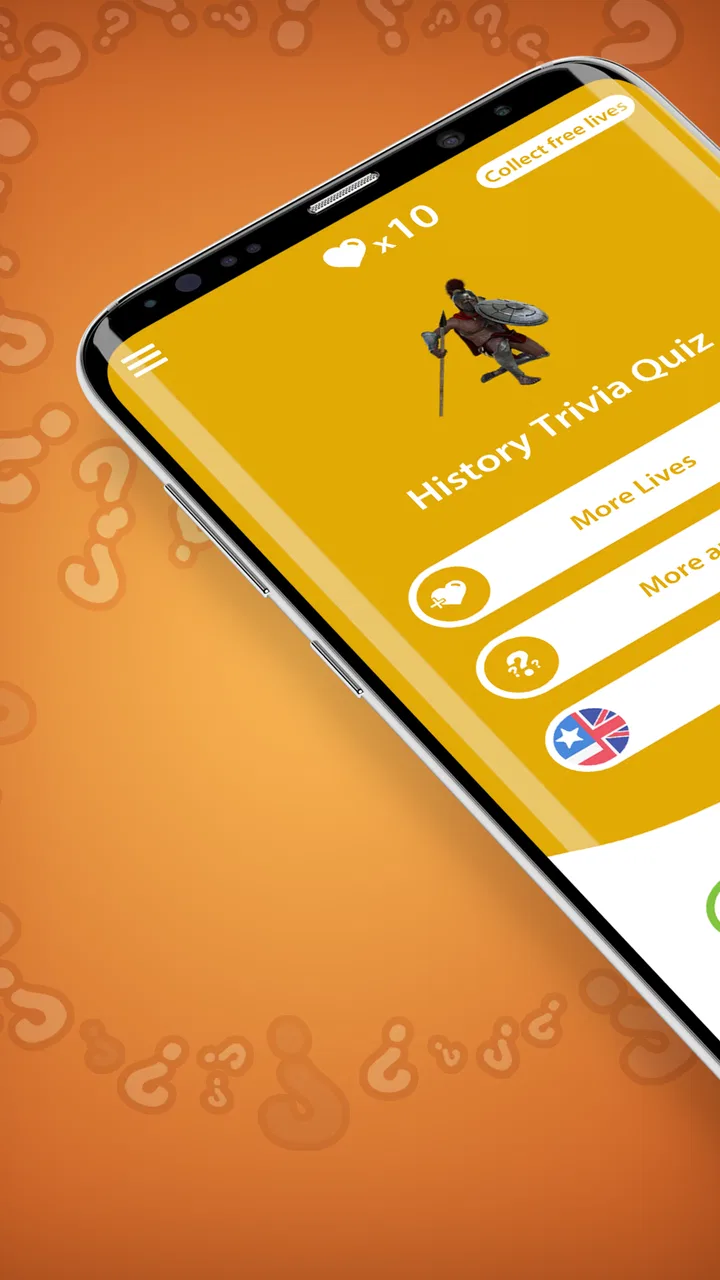
History Trivia Quiz Games
- 4.9
- Rating
- 100.00K
- Installs
- Free
- Price

 Analysis by App-foxy
History Trivia Quiz Games is the kind of small, focused game I reach for when I want to test myself without committing to a long session. It is built around history questions, so the appeal is straightforward: you answer, remember what you missed, and gradually become more comfortable with details from the past. I found that simple focus more useful than a crowded trivia app trying to cover every subject at once.
The game is listed as a free trivia title for everyone, developed by Battery Stats Saver. It has reached over 100 thousand installs and holds a 4.7 average from around 3.2 thousand ratings, which suggests that its basic approach works well for a substantial group of players. It was released on May 28, 2018, and the current version is 6.1.0, with Android 7.0 or later required.
How the history quiz feels in everyday use
My first impression was that this is best understood as a quick learning game rather than a full history course. The short store description, “History Trivia,” sets the expectation accurately: you are coming here for questions and answers, not a long narrative campaign or a textbook-style lesson. That narrow purpose is also its strongest identity.
You May Also Like

 Pandora - Music & Podcasts
Pandora’s Music Is Easy to Start, but Harder to Recover
Pandora’s strength is its low-effort path from a seed to a station. Its weak spot is how much confidence it asks you to place in connection, setup, and quiet recovery.

 AccuWeather: Weather Radar
AccuWeather Review: A Quick, Clear Forecast for Everyday Decisions
For everyday plans, the best forecast is the one you can understand quickly. AccuWeather makes rain timing, radar, and local conditions easy to act on, with a few trade-offs.

 Hill Climb Racing
Why Hill Climb Racing Still Turns Crashes Into One More Run
A tiny car, a bumpy hill and one more upgrade: Hill Climb Racing keeps resurfacing because its simple chaos makes every near-miss feel personal.

 AliExpress - Shopping App
AliExpress Makes Global Shopping Feel Personal, but Shoppers Bear the Risk
AliExpress turns a global marketplace into a pocket-sized discovery engine. Its reach is useful, its shopping loop compelling, and its trade-offs easy to miss.

 Lords Mobile: Kingdom Wars
Lords Mobile Is a Kingdom-Building Routine, Not a Quick Match
A case-by-case verdict on the building, battles, device demands, and social commitments that make Lords Mobile rewarding for some players and exhausting for others.

 PDF Scanner app - TapScanner
TapScanner Makes Paperwork Easier to Capture, Check, and Share
TapScanner makes scanning with a phone feel less like a rescue operation and more like a dependable step in getting work done. Its capture tools are useful, though not flawless.
More From Our News Desk
View All News


I like this format for small gaps in the day. A few questions while waiting for an appointment, during a commute, or before putting the phone away at night can feel more productive than scrolling through unrelated content. The game gives history a playful entry point, which makes it easier to start than opening a large reference book when I only have a few minutes.
The most useful way to play is not to treat every question as a score challenge. I would pause after an incorrect answer, identify the period or subject involved, and make a mental note of the connection. For example, if a question exposes a weak spot in ancient civilizations, I would use that result as a cue to explore that area elsewhere. The quiz works best as a discovery tool, not as a replacement for serious historical study.
That distinction matters because trivia questions often reward recognition. You may remember seeing a name or event without fully understanding its causes, consequences, or historical context. I consider that a worthwhile first step, but not the end of learning. Players who use each missed answer as a prompt for further reading will get more from the app than players who simply rush through questions.
A practical routine for remembering more
I would use a three-pass routine. On the first pass, answer naturally without looking anything up. On the second, revisit the questions that caused hesitation, even if the final answer happened to be correct. On the third, group those weak points into broad themes such as rulers, wars, inventions, geography, or cultural history. This turns a casual session into a lightweight revision exercise without requiring a separate study system.
Another useful habit is to avoid playing only when you already feel confident. If you choose questions solely to protect a good result, the game becomes a reassurance tool instead of a learning tool. The more honest approach is to accept mistakes and use them to identify gaps. That is especially helpful for people who studied history years ago and remember the general story but have lost names, dates, and relationships between events.
I also found that this kind of game suits shared play in a way that a conventional history article does not. One person can read a question aloud, everyone can commit to an answer, and the explanation can become a conversation. It is a simple use case, but it changes the experience from solitary testing into a casual discussion starter. I would not buy it specifically as a party game, yet it can fill that role more easily than a dense educational app.
What the free entry means for value
There is no purchase price to begin using History Trivia Quiz Games. That makes the initial decision easy: anyone interested in history trivia can try it without paying upfront. For a free app, the threshold is low enough that even occasional players may find it worthwhile, particularly if they enjoy learning through questions rather than reading long explanations.
There are in-app purchases ranging from $0.99 to $99.99 per item. I would therefore separate the value question into two parts. The free access determines whether the game is worth trying, while the paid options determine whether a particular player wants to spend more after experiencing it. I would not assume that paying is necessary for everyone, and I would review the purchase screen carefully before confirming anything.
That range is important because a low-cost optional purchase and a much larger purchase represent very different decisions. A casual player may be perfectly satisfied with free access, while a committed trivia fan might consider a smaller purchase reasonable if it removes a specific annoyance or adds something genuinely useful. The larger end of the range deserves more caution: it should be judged against how often you play and how much extra value you personally receive, not against the game’s rating.
In my view, the free version has its clearest value when you treat it as a repeatable mental exercise. If you open it once, answer a few questions, and never return, it may feel disposable. If you build it into a weekly learning habit, the same free access becomes more meaningful. The app’s value comes from repeated engagement with history, not from a single impressive session.
Where it stands beside other trivia choices
Compared with broad trivia games that mix history with sport, entertainment, science, and general knowledge, this title is more focused. That is an advantage when you specifically want history and a disadvantage when you want variety. I would choose it over a general quiz app before a study session because it keeps the subject consistent and makes weak areas easier to notice.
Compared with a history podcast, documentary, or book, the game is faster and more interactive but less complete. Those alternatives provide context, chronology, and interpretation. This app provides recall practice. I see them as complementary rather than competing options: the quiz can reveal what I do not know, while longer material can explain why the answer matters.
Compared with flashcards, the game is likely to feel less like formal revision and more like entertainment. Flashcards are better when I need to control exactly which facts appear and repeat them on a deliberate schedule. A trivia game is better when I want to be surprised by the subject matter and keep the learning experience light. Choosing between them depends on whether the goal is structured memorization or enjoyable practice.
It is also worth distinguishing this game from a full educational platform. A platform designed for courses may offer lessons, progress paths, source material, or deeper assessments. History Trivia Quiz Games has a narrower promise, and I would not select it for exam preparation or a detailed research project. Its strength is accessibility: it makes starting easy, even when I am not ready for a formal study plan.
Tradeoffs that affect the experience
The focused subject can become repetitive for players who want constant novelty. Someone who already spends a lot of time on history trivia may eventually prefer a larger question pool or a more structured learning system. I would also skip it if my main interest is historical storytelling, because answering isolated questions cannot provide the same emotional or intellectual depth as following an entire period from beginning to end.
There is a second tradeoff between speed and understanding. Quick questions are convenient, but they can encourage guessing. A lucky answer may look like knowledge even when I could not explain the topic afterward. To avoid that false confidence, I would treat uncertain correct answers as review items too. This small change makes the game more honest as a learning aid.
The purchase structure is another point to consider. Free access is attractive, but the presence of per-item purchases means I would pay attention to what is included before spending. I would not recommend making a large purchase simply because the app is enjoyable in short bursts. The sensible approach is to use it first, decide whether it has become part of your routine, and then compare any proposed payment with the actual benefit it offers you.
The age rating is Everyone, which makes the subject approachable for a broad audience. Still, younger players may need help placing answers in context, especially when a question touches on complicated conflicts or historical figures. I would enjoy it with a child as a conversation starter, but I would not rely on the quiz alone to teach sensitive history accurately or completely.
Device compatibility is reasonably accommodating for older Android users because the minimum requirement is Android 7.0. That can make the game practical on phones that do not run the newest operating system. I would still judge the experience on the actual device rather than assuming that a compatible operating system guarantees a perfect fit, especially if the phone is older or storage is limited.
Who is most likely to enjoy it
This is a good match for curious beginners, returning students, and history fans who enjoy testing recall. It also suits people who want an educational activity that does not feel like homework. If you often think, “I know this name, but I cannot remember why,” a quiz format can help turn that vague familiarity into a clearer map of what you know and what needs attention.
Teachers, parents, and study groups may find it useful as an informal warm-up. I would use a few questions to begin a discussion, then move to a reliable book or educational source for explanation. The game can make a quiet group more willing to participate because everyone starts with the same prompt. Its role is strongest at the beginning of a lesson or conversation, not as the complete lesson.
It is less suitable for a player who wants a competitive multiplayer experience, a rich visual adventure, or a detailed progression system. It is also not my first choice for someone preparing for a formal history examination, where controlled coverage and dependable revision tools matter more than spontaneous trivia. In those situations, a textbook, flashcard system, or course platform would be the better investment of time.
People who dislike repeated factual questions should probably skip it as well. The entire appeal depends on enjoying recall, correction, and gradual improvement. If you prefer learning through stories, maps, documentaries, or hands-on projects, the quiz may feel too narrow even though the subject itself interests you.
My verdict on downloading and spending
I would recommend trying History Trivia Quiz Games if you want a free, focused way to exercise your history knowledge in short sessions. Its 4.7 average and more than 100 thousand installs give it encouraging signs of broad appeal, but my recommendation is based more on the clear fit between its format and its audience: it is simple to start, easy to revisit, and centered on one subject.
I would begin without paying. Use the free access long enough to see whether the questions fit your interests and whether you actually return to the game. If it becomes a regular part of your routine, a small purchase may be worth considering when its benefit is clear. I would be much more cautious about the highest-priced option, because free availability means the paid value has to be personal and demonstrable rather than assumed.
For me, the final decision is a qualified yes. Download it for casual history practice, not for a complete education in history. It earns its place when I want a quick challenge, a prompt for further reading, or an easy activity to share with someone else. I would skip it in favor of a deeper resource when I need chronology, evidence, interpretation, or exam-focused preparation.
Battery Stats Saver has kept the concept deliberately narrow, and that is both the reason to try it and the reason not to expect too much from it. The current version, 6.1.0, keeps the app relevant for its intended Android audience, while the Everyone rating makes it approachable across age groups. If your goal is to make history a regular part of your spare time, this game is a sensible starting point; if your goal is mastery, let its questions guide you toward more substantial material.
FAQs for History Trivia Quiz Games
01What type of questions can I expect in History Trivia Quiz Games?
History Trivia Quiz Games typically feature questions spanning various eras and regions, including ancient civilizations, world wars, famous historical figures, and significant events. The questions are designed to test both your knowledge and your understanding of historical timelines, offering a comprehensive challenge to history enthusiasts.
02Is History Trivia Quiz Games suitable for all age groups?
Yes, History Trivia Quiz Games are designed to be accessible to a wide audience, including teenagers and adults with an interest in history. The questions range from easy to challenging levels, making it suitable for both casual learners and history buffs. Parental guidance is recommended for younger players due to complexity.
03Does the app require an internet connection to play?
While some features of History Trivia Quiz Games might require an internet connection, such as leaderboard updates or new question downloads, the core game is often available offline. This means users can enjoy the trivia challenges without needing constant internet access, making it convenient for travel and offline moments.
04Are there in-app purchases or ads in History Trivia Quiz Games?
History Trivia Quiz Games typically offer a free version supported by ads, with optional in-app purchases to remove ads or unlock additional content. These purchases might include extra question packs or themes. Users should review the app store listing for specific details on pricing and available purchases.
05How can I track my progress and improve in History Trivia Quiz Games?
The app usually provides features like score tracking, progress bars, and achievement badges to help you monitor your improvement. Additionally, you can compare your scores with friends or on global leaderboards. Regular play and reviewing missed questions can also enhance your historical knowledge and performance.
Pros
- Engaging questions on diverse historical topics.
- User-friendly interface with intuitive navigation.
- Regular updates with new quizzes and content.
- Offline mode available for on-the-go play.
- Leaderboard fosters a competitive spirit.
Cons
- Ads can be intrusive during gameplay.
- Limited hints can stall progress.
- Requires internet for some features.
- In-app purchases can be pricey.
- Occasional bugs in older devices.

History Trivia Quiz Games
Gallery